

Electric Cargo Golf Cart: The Smart Solution for Modern Work and Utility Transportation
Industrial campuses, large warehouses, universities, and agricultural farms share one common challenge: how to move tools, equipment, and materials quickly and efficiently without disrupting the environment. Traditional heavy trucks are often too large, expensive, and noisy for these spaces. Enter the electric cargo golf cart, the ultimate smart solution for modern utility transportation.
Why Switch to Electric Cargo Carts?
· Superior Efficiency and Heavy-Duty Performance: Equipped with powerful torque and durable cargo beds, electric utility carts are designed to haul heavy loads effortlessly. High-capacity controllers and advanced motors ensure they tackle inclines and rugged terrain with ease.
· Cost-Effective Operations: Lower fuel costs because electricity is drastically cheaper than gasoline or diesel, plus fewer scheduled services.
· Eco-Friendly and Quiet Operation: Operating silently inside warehouses or around quiet commercial campuses, electric cargo vehicles eliminate harmful exhaust emissions and reduce noise pollution.
Key Use Cases
The same platform adapts to many jobs. University facilities teams move AV gear and grounds tools between buildings. Manufacturers shuttle parts across assembly lines without leaving the site. Farms use them for fence checks and feed runs. Airports and logistics yards rely on them for last-meter transport where larger vehicles cannot fit. One cart replaces several single-purpose machines.
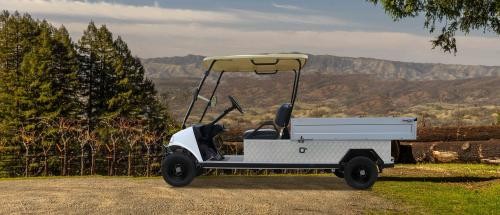
Specs That Matter for Cargo Work
When evaluating a cargo cart, look past the brochure photo. Payload rating and bed dimensions decide what you can actually carry. Battery cycle life and charging time decide how many shifts it supports. A high-torque controller and quality brakes decide how safely it handles slopes with a full load. Standardized parts also reduce the spare inventory a facility must stock.
Cargo Carts vs. Full-Size Trucks
A pickup or van is overkill for many internal routes. Cargo carts cost less to buy and run, maneuver in tight aisles, and produce no exhaust indoors. They will not replace a truck for highway hauls, but for the majority of on-site movement they are the more rational choice, lowering total cost of ownership while keeping sites cleaner and quieter.
Keeping Your Cargo Cart Running
Good habits protect uptime. Charge lithium packs with the recommended charger, keep tires at correct pressure, and inspect brakes and cargo latches regularly. Because electric carts have fewer moving parts than combustion vehicles, scheduled service is light, but a simple log per vehicle helps catch wear before it becomes a failure during a busy shift.
The Productivity Payoff
The real case for a cargo cart is time. When tools and materials reach the right place without a truck, or a worker, the whole operation moves faster. Facilities that replace several ad-hoc trips with a planned cart route often recover the purchase cost within a single busy season, then keep saving on fuel and maintenance for years. For sustainability-minded organizations, the zero-emission drivetrain also supports green-operations goals without sacrificing capability.
Choosing the Right Cargo Configuration
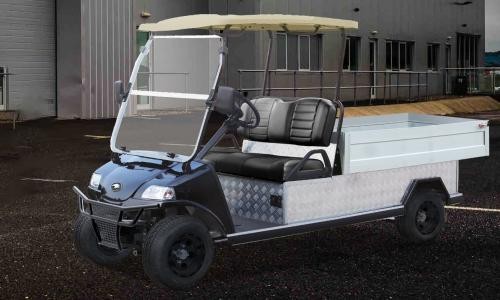
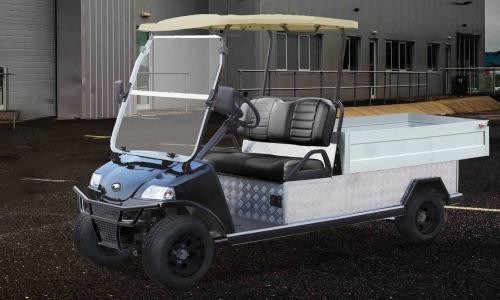
Cargo carts are not one-size-fits-all. A flat bed suits pallets and bulky items, while a enclosed or railed bed protects smaller parts from shifting. Dump beds speed up unloading of soil, gravel, or waste. For mixed sites, a modular setup with removable racks adapts to the day's task. Match the configuration to your heaviest recurring load, then leave margin so occasional oversized jobs stay manageable.
Frequently Asked Questions
What payload can an electric cargo cart handle?
Payload varies by model and configuration. HDK utility carts such as the Turfman series are built for daily material handling with heavy-duty beds; confirm the specific rating for your chosen model and avoid exceeding it to protect brakes and frame life.
Are electric cargo carts safe to use indoors?
Yes. Because they produce no tailpipe emissions and run quietly, they are well suited to warehouses, greenhouses, and enclosed yards where gasoline equipment would be hazardous or disruptive.
How do they compare on running cost?
Electric carts win on energy and maintenance. Electricity is cheaper than fuel, and with fewer moving parts there are fewer items to service. Over a multi-year horizon the savings typically outweigh the higher initial battery cost.
Boost productivity and streamline your facility's daily logistics with reliable commercial solutions. Check out our Commercial collection to find heavy-duty utility vehicles designed for your business.
Can a cargo cart also carry passengers?
Some utility models include a front seat for an operator plus a small passenger, but most cargo carts prioritize bed space over seating. If you need to move both people and materials regularly, consider a passenger model for people and a dedicated cargo cart for goods, or choose a model with a configurable rear that switches between the two.
How long do electric cargo carts last?
With proper charging and basic care, a quality electric cargo cart serves reliably for many years. Lithium batteries typically outlast lead-acid by a wide margin, and a corrosion-resistant frame with sealed electronics extends life in humid or outdoor settings. Routine inspections are the main determinant of how long the vehicle stays productive.
What terrain can a cargo cart handle?
With appropriate tires and a lifted option, cargo carts manage packed paths, gentle slopes, and uneven yards. For very rough off-road use, choose a model with higher clearance and all-terrain tires rather than a standard neighborhood configuration to protect the chassis and improve grip.
Get Your Free Factory Quote
Tell us your model and market — our sales team replies within 1 business day with MOQ, pricing and lead time.